
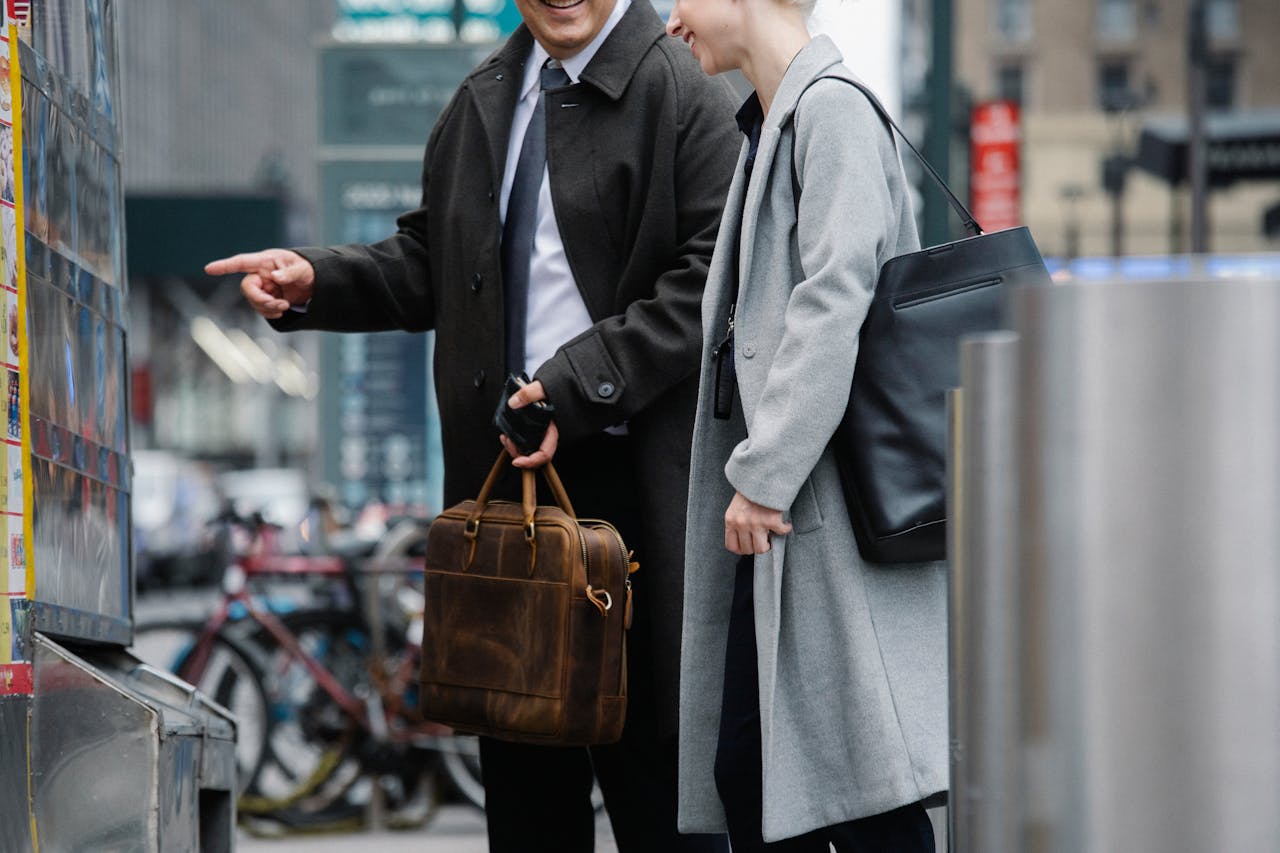
work bags

The Commuter’s Companion: Best Work Bags for Men and Women on the Go

In today’s fast-paced world, commuting has become a regular part of many people’s daily routine. Whether you're hopping on a train, cycling to the office, or navigating busy city streets, the right work bag can make all the difference. The best work bags for commuters are not only stylish and functional, but also lightweight, durable, and smart enough to keep up with your lifestyle. Let’s dive into what makes a great commuter bag and explore some of the best options on the market.

Why Your Work Bag Matters

A good work bag is more than just a fashion accessory. It’s a portable command center for your day—carrying everything from your laptop and documents to your lunch, chargers, and personal items. For commuters, the bag must be light enough to carry comfortably, tough enough to withstand daily wear and tear, and smartly designed for organization and security.

Key Features to Look for

When shopping for work bags, consider the following features:

  • Lightweight Materials: Bags made of nylon, polyester, or high-quality canvas are generally lighter and easier on your back and shoulders during a long commute.

  • Durability: Look for reinforced stitching, quality zippers, and water-resistant materials to ensure your bag can withstand daily use and unexpected weather.

  • Smart Design: Compartments for laptops, documents, pens, keys, and even water bottles are essential. Anti-theft features and RFID-blocking pockets add extra security.

  • Comfortable Straps: Padded, adjustable shoulder straps or comfortable handles make a big difference during longer commutes.

  • Gender-Neutral Style: Many brands now offer work bags for men and women that are both functional and fashionable.

Best Work Bags for Men and Women

Here are some of the best options currently available, suitable for a range of professions and personal styles:

1. The Sleek Laptop Backpack

A minimalist backpack with a slim profile is perfect for city commuters. Brands like Samsonite and Bellroy offer backpacks that include padded laptop compartments, hidden pockets for valuables, and breathable mesh back panels for comfort. These bags are ideal for professionals who prefer a modern, understated look.

2. The All-Day Tote

For those who need more space without sacrificing style, a structured tote is an excellent choice. Look for options with a zippered top, interior laptop sleeve, and multiple compartments. Totes made with weather-resistant material are especially practical for unpredictable commutes. They strike the right balance between professional and chic, making them excellent work bags for men and women who value aesthetics.

3. The Versatile Messenger Bag

Messenger bags offer a classic look with crossbody functionality, making them easy to carry while biking or walking. Choose a model with a padded strap and secure flap closure. Brands like Timbuk2 and Tumi offer messenger bags with modern tech features, making them a favorite among tech-savvy professionals.

4. The Expandable Briefcase

For those who prefer a more traditional look, an expandable briefcase is a great pick. With compartments for paperwork, electronics, and even a change of clothes, these bags are ideal for those who move between meetings or travel frequently. Many briefcases now come with detachable straps and trolley sleeves for added convenience.

5. The Hybrid Work Bag

Hybrid bags can switch from a briefcase to a backpack or shoulder bag. They offer the most versatility, especially for those who travel often or need to switch up their carrying style throughout the day. These are some of the smartest work bags on the market, designed for flexibility and comfort.

How to Choose the Right One for You

The best work bags are those that fit your daily routine, your wardrobe, and your work needs. Ask yourself:

  • How far do I commute and by what means?

  • Do I need to carry a laptop or tablet daily?

  • Do I prefer carrying my bag on my back, shoulder, or by hand?

  • Is style or functionality more important to me—or do I need both?

Once you’ve answered these questions, you can narrow down your choices and invest in a bag that will serve you well for years.

The ideal work bag should simplify your commute, protect your essentials, and elevate your professional image. With so many options available, there’s no reason to compromise on style, function, or comfort. Whether you prefer a sleek backpack, a versatile tote, or a classic messenger, the best work bags for men and women are designed to meet the demands of modern commuting life. Invest in one that matches your routine and personality—you’ll thank yourself every workday.

Solar Panel Tax Incentive In South Africa

Solar Panel Tax Incentive In South Africa

This note sets out the basic characteristics and requirements for the solar panel incentive South Africa announced by the Minister of Finance on 22 February 2023. This is meant to help individuals in their immediate decision-making, rather than postponing any solar installation until the legislative process can be finalised.

What Is The Objective Of The Solar Panel Incentive?

Government proposes this programme to encourage households to invest in clean electricity generation capacity which can supplement electricity supply. The incentive will only be available for 1 year to encourage investment as soon as possible.


Who Can Claim The Solar Panel Tax Incentive?

Individuals who pay personal income tax can claim the rebate against their tax liability. Not for solar installations at business premises. (Please see Chapter 4 of the Budget Review for the announcement on the expansion of the renewable energy tax incentive South Africa for businesses.)


What Can Be Claimed?

Individuals will be able to claim a rebate to the value of 25% of the cost of new and unused solar photovoltaic (PV) panels, up to a maximum of R15 000 per individual.

For example, a person buys 10 solar PV panels, at a cost of R4000 per panel (so total cost of R40 000). That person would be able to claim 25% of the cost up to R15 000, so R10 000.

A different person is able to buy 20 panels at a cost of R4000 per panel (so total cost of R80 000). The calculation of 25% adds up to R20 000, but they can only claim R15 000.


What Are The Requirements?

  • Only new and unused solar PV panels qualify, to ensure that the capacity is in addition to what the country already has in place. The panels can be part of a new system, or an extension of an existing system.
  • Only solar PV panels with a minimum capacity of 275W per panel (design output) qualify for the rebate.
    Other components of a system – batteries, inverters, fittings or diesel generators – and installation costs
    do not qualify. Portable panels will also not qualify.
  • Solar PV panels must be installed at a residence that is mainly used by an individual for domestic
    purposes. The installation will have to be proved with a certificate of compliance in terms of the Electrical
    Installation Regulations, 2009 to ensure safety of the installation and compliance to electric regulations.
  • The solar must form part of a system connected to the mains distribution of the private residence.
  • The rebate applies to qualifying solar PV panels that are brought into use for the first time in the period
    from 1 March 2023 to 29 February 2024.

How Can People Claim The Incentive?

Individuals will be able to claim the rebate if they have:

  • A VAT invoice that indicates the cost of the solar PV panels separately from other items, along with proof
    of payment.
  • Certificate of Compliance evidencing that the solar PV panels were brought into use for the first time in
    the period from 1 March 2023 to 29 February 2024.
    PAYE taxpayers will be able to claim the rebate on assessment during 2023/24 filing season. Provisional
    taxpayers will be able to claim the rebate against provisional and final payments.

Why Only Solar Panels, And Not Diesel Generators, Inverters, Batteries And Installation Costs?

They are not a sustainable solution to generate additional power. They increase demand for fuel and have negative environmental impacts. Including generators would detract from the climate objectives government is committed to, where fiscal instruments like the carbon tax play an important role.

While an inverter and batteries are required to use solar panels, inverters and batteries can be operated without solar panels – in which case they offer no additional capacity to the system. The focus on solar PV panels is to maximize the use of limited government funds to get as much additional generation capacity as possible – and recognizes that government will have to focus on a partial rebate of the components that are most directly linked to generation.

What About People Who Rent Their Homes?

There is no ownership limitation for the incentive. Therefore, installations by landlords or renters would be eligible. However, only the party that pays for the solar panels can claim the rebate.

What About Sectional Titles / Body Corporates?

If occupants are enabled to install their own panels, then the tax incentive applies as for all other individuals. A body corporate will not be able to claim this incentive. It is unclear whether body corporates will purchase solar installations instead of using leasing. Or other options to avoid up-front costs for members.

Government will be consulting on this aspect. If there is widespread interest in body corporates purchasing and installing solar panels, then payment (e.g special levies) for solar installations levied from the occupants would have to indicate the cost of the solar panels separately – as would be the case for any other claimant. The applicable Certificate of Compliance data would also have to be shared with SARS. Because there would be some adjustments to ensure that the right people could claim the right amounts, there will be consultation to determine the required approach and documentation.

Will I Need To Pay Sars Back If I Sell My Home After Installing Solar Pv Panels?

No, there will be no recoupment if you sell your house after having benefitted from this incentive as the solar panels will likely remain fixed to the house and used by the following owner – still enabling an expansion in generation. There will, however, be a claw-back of the rebate if you sell the panels themselves within one year after they were first brought into use to counter potential abuse.

When Will This Become Part Of Tax Legislation?

A draft version of the legislation will be published for public comment no later than the publication date of the 2023 Draft Taxation Laws Amendment Bill. The Minister tables tax bills during the Medium Term Budget Policy Statement (MTBPS) in October each year. Parliament considers the amendments after which the President can assent to the amendments – usually by January of the year after the announcement.

The aim of this is to provide as much upfront clarity as possible. Therefore, individuals do not need to wait for the tax bills before making a decision. The guidance provided is, subject to the outcome of the consultative process on the proposal and Parliament’s ultimate decisions on the legislation giving effect to the proposal.

For more information, contact our tax expert team at Tax Leaders in South Africa – [email protected] or www.taxleaders.net