
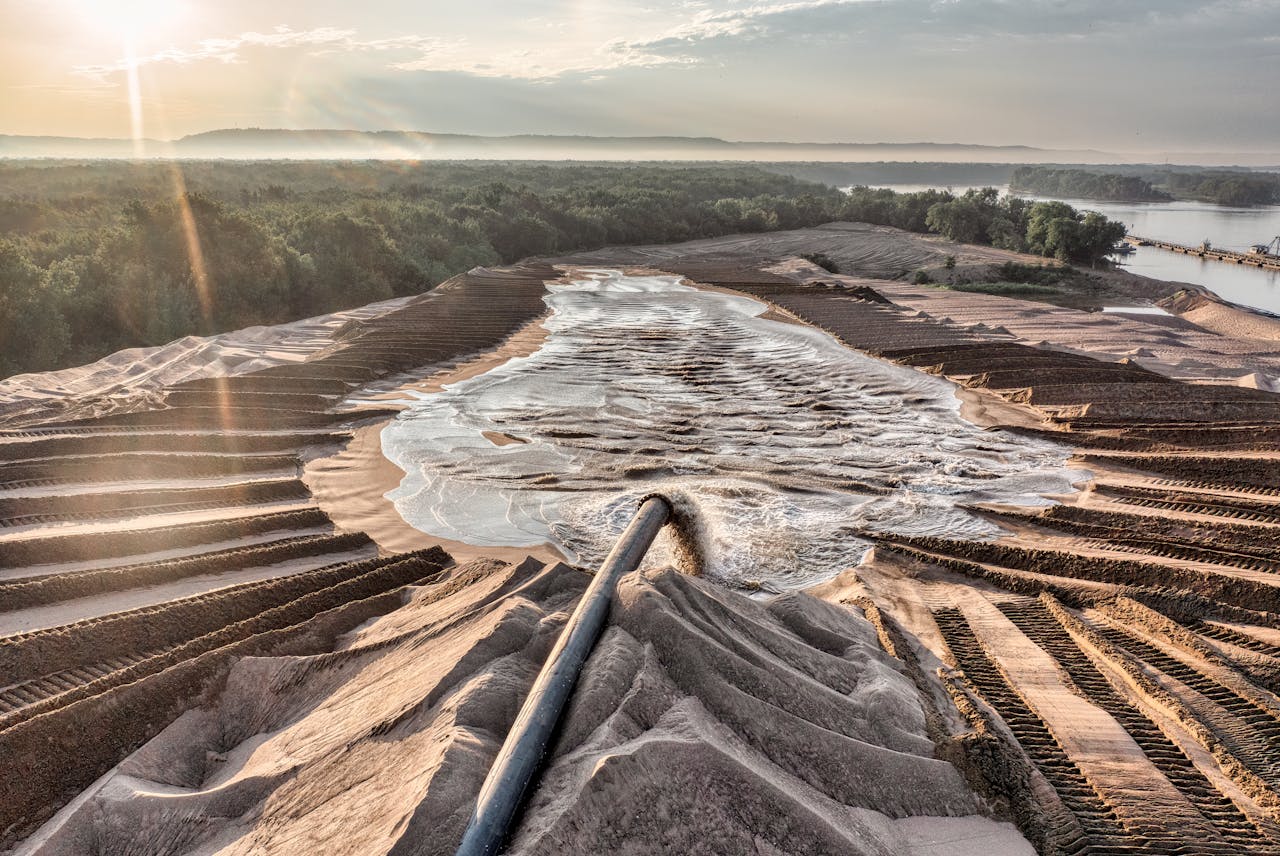
dredging company

The Impact of Dredging on Nature and Innovations for a Greener Future

Dredging plays a critical role in maintaining navigable waterways, reclaiming land, and supporting various industries, including construction and mining. However, despite its economic benefits, dredging has significant environmental implications that must be addressed. From disrupting aquatic ecosystems to contributing to water pollution, the impact of dredging is a topic of concern. Fortunately, innovative solutions and sustainable practices can mitigate these challenges, allowing a dredging company or a dredging contractor to operate in a more environmentally responsible manner.

The Challenges of Dredging

1. Disruption of Aquatic Ecosystems

One of the primary environmental concerns associated with dredging is the disruption of aquatic habitats. Many marine and freshwater organisms, including fish, crustaceans, and plant life, rely on stable ecosystems. When sediments are disturbed, essential nutrients and organisms can be displaced, leading to habitat destruction and reduced biodiversity.

Additionally, dredging can alter the natural flow of water bodies, affecting fish migration patterns and breeding grounds. This disruption may have long-term consequences on local fisheries and overall aquatic health.

2. Sediment Resuspension and Water Pollution

A significant issue that arises from dredging is sediment resuspension. When a dredging contractor removes materials from the bottom of a river, lake, or seabed, fine sediments are released into the water column. These sediments can carry contaminants such as heavy metals, pesticides, and industrial waste, leading to water pollution.

Increased turbidity (cloudiness of water) can also block sunlight penetration, negatively affecting photosynthesis in aquatic plants. This, in turn, disrupts the entire food chain, impacting both marine life and water quality.

3. Coastal Erosion and Land Instability

Dredging can contribute to coastal erosion by removing sediment that naturally stabilizes shorelines. When a dredging company extracts large amounts of material, it may inadvertently weaken coastal defenses, making areas more vulnerable to erosion and flooding.

Furthermore, land subsidence can occur when excessive sediment is removed from estuaries and riverbeds. This can lead to sinking land, threatening nearby infrastructure, including roads, bridges, and buildings.

4. Noise and Air Pollution

Dredging operations generate noise pollution that can disturb marine life, especially species that rely on echolocation, such as dolphins and whales. The constant underwater noise from machinery can interfere with their ability to communicate, navigate, and find food.

Additionally, dredging equipment often runs on fossil fuels, releasing greenhouse gases and contributing to air pollution. A lack of proper emission controls can further exacerbate environmental degradation.

Sustainable Solutions for Dredging

1. Environmentally Friendly Dredging Techniques

To minimize the environmental impact, a dredging contractor can adopt more sustainable dredging methods. One such method is precision dredging, which targets specific areas with minimal disturbance. This approach reduces sediment resuspension and prevents unnecessary damage to aquatic habitats.

Another solution is using hydraulic dredging instead of mechanical dredging. Hydraulic dredging uses suction to remove sediment gently, reducing the likelihood of disturbing marine life and limiting water contamination.

2. Silt Curtains and Sediment Control Measures

A dredging company can implement silt curtains—floating barriers that contain suspended sediments—to prevent pollutants from spreading to other areas. These curtains are especially useful in projects near sensitive ecosystems or drinking water sources.

Additional measures, such as sediment traps and water filtration systems, can further help in controlling the spread of contaminants, ensuring cleaner and safer water conditions.

3. Habitat Restoration and Compensation

To offset environmental damage, many dredging projects now include habitat restoration efforts. After dredging is completed, a dredging contractor can engage in replanting aquatic vegetation, rebuilding artificial reefs, and creating wildlife sanctuaries to support biodiversity.

Moreover, compensatory projects such as wetland creation and mangrove rehabilitation can help restore ecological balance, providing essential breeding and feeding grounds for marine species.

4. Eco-Friendly Equipment and Renewable Energy

Modern advancements in technology have led to the development of eco-friendly dredging equipment. A forward-thinking dredging company can invest in electric or hybrid-powered dredgers, which reduce carbon emissions and lower fuel consumption.

Additionally, integrating renewable energy sources, such as solar or wind power, into dredging operations can further reduce the environmental footprint of these activities.

5. Regulatory Compliance and Environmental Monitoring

Government regulations play a crucial role in ensuring sustainable dredging practices. Many countries now require environmental impact assessments (EIAs) before approving dredging projects. These assessments help identify potential risks and implement mitigation strategies.

Continuous monitoring of water quality, sediment displacement, and marine life health can also help a dredging company make informed decisions about minimizing its ecological impact. Modern monitoring tools, such as satellite imaging and underwater drones, provide real-time data for better environmental management.

Dredging remains a vital activity for maintaining waterways and supporting industrial growth, but it comes with significant environmental challenges. From disturbing marine ecosystems to increasing water pollution, these effects must be carefully managed. However, by adopting sustainable dredging techniques, investing in eco-friendly equipment, and implementing habitat restoration projects, a dredging contractor can minimize harm and promote environmental conservation.

As regulations become stricter and awareness about ecological protection grows, the dredging industry must prioritize responsible practices. With the right balance between economic development and environmental stewardship, the long-term sustainability of aquatic ecosystems can be preserved while ensuring the continued benefits of dredging activities.

Legal and municipal requirements for successful property rezoning approval

Legal and Municipal Requirements for Rezoning Property Successfully

Land development in South Africa is closely regulated to ensure that urban growth remains structured, sustainable, and aligned with public interest. Whether for residential expansion, commercial redevelopment, or mixed-use projects, understanding how planning systems operate is essential before making any property changes.

One of the most important considerations for landowners and developers is how zoning laws influence what can and cannot be built on a site. These rules are not static and can be changed through formal municipal processes, but only under strict legal conditions.

Before submitting any application, it is critical to understand how the process works and what authorities expect when assessing a request for changing land use rights. A well-prepared approach can significantly improve the chances of approval, while incomplete submissions often result in delays or refusals, particularly when dealing with rezoning property requests.

Understanding municipal land use control systems

Municipal planning systems exist to regulate how land is developed and used within a specific jurisdiction. These systems are guided by national legislation, municipal zoning schemes, and spatial development frameworks that aim to balance growth with environmental and social needs.

In practice, zoning determines whether land is designated for residential, commercial, agricultural, industrial, or mixed-use purposes. Any deviation from the approved zoning requires formal approval through a structured application process reviewed by local authorities, such as planning departments within municipalities.

In cities like Cape Town, land use management is particularly detailed due to rapid urban growth and competing development pressures. Applicants are expected to demonstrate that proposed changes align with long-term planning goals and will not negatively impact surrounding communities.

A successful application is not simply about requesting a change; it is about proving compatibility with broader municipal strategies, infrastructure capacity, and environmental considerations.

Legal framework governing land use changes

The legal foundation for land use change applications is rooted in national and municipal legislation. These laws define what information must be submitted, how applications are assessed, and what criteria must be met before approval is granted.

The following steps typically form part of the formal legal process:

  1. Pre-application consultation with municipal planning officials to confirm requirements and identify potential constraints
  2. Appointment of a qualified land use or town planning professional to prepare documentation and motivation reports
  3. Submission of a formal application with supporting drawings, site plans, and land use motivation statements
  4. Public participation process, where affected parties are notified and allowed to comment or object
  5. Assessment by municipal planning committees, considering spatial policies and legal compliance
  6. Final decision issued by the authorized municipal decision-making body
  7. Appeal period, where applicable, if the application is refused or conditions are disputed

Each stage must be handled carefully, as missing documentation or procedural errors can invalidate the application or delay approval significantly.

At this stage, many applicants underestimate the complexity involved in rezoning property processes, particularly the need for alignment between legal requirements and spatial planning objectives. The outcome is heavily influenced by how well the application is prepared and justified.

Municipal approval considerations and planning alignment

Municipal authorities evaluate applications based on several key factors that go beyond simple land ownership rights. These include infrastructure capacity, traffic impact, environmental sensitivity, and compatibility with surrounding land uses.

Planning officials assess whether the proposed development supports integrated urban growth and whether it aligns with approved spatial development frameworks. If an application conflicts with these policies, it is unlikely to succeed without substantial justification or redesign.

In many cases, applicants seek professional assistance to ensure compliance with technical requirements and to strengthen the motivation behind the proposal. This is particularly important when dealing with complex land parcels or sensitive areas where development pressure is high.

A well-prepared submission for rezoning property is typically supported by detailed planning reports, environmental assessments (where required), and clear explanations of public benefit or economic value.

Common compliance risks and procedural challenges

Although the process is clearly defined, many applications face challenges due to avoidable mistakes or insufficient preparation. Understanding these risks can improve the likelihood of a successful outcome.

Common issues include:

  • Incomplete or inaccurate application documentation submitted to the municipality
  • Failure to engage with surrounding property owners during the public participation process
  • Misalignment between the proposed development and municipal spatial planning frameworks
  • Overlooking environmental regulations or heritage restrictions that apply to the site
  • Underestimating infrastructure limitations such as water, sewage, or road access capacity
  • Submitting applications without professional planning input or technical reports

These challenges can lead to delays, additional information requests, or outright refusals. In some cases, applicants must restart the process entirely, resulting in significant time and financial loss.

Proper due diligence is therefore essential before proceeding with any land use change request, especially where rezoning property is involved in high-density or strategically important areas.

Strategic planning and improving approval outcomes

Successful land use applications are typically the result of careful preparation, professional input, and strong alignment with municipal objectives. Authorities are more likely to approve proposals that demonstrate clear public benefit, efficient land use, and minimal disruption to surrounding areas.

Engaging early with municipal officials can help identify potential issues before submission. This allows applicants to adjust proposals in advance, reducing the likelihood of rejection later in the process.

It is also important to consider long-term implications rather than focusing solely on immediate development goals. Well-planned projects contribute to sustainable urban growth and are viewed more favourably during assessment.

Applicants who approach rezoning property strategically, with a clear understanding of legal frameworks and planning expectations, generally experience smoother approval processes and fewer administrative setbacks.

Ultimately, land use change is not just a procedural exercise but a structured evaluation of how land fits into the broader urban environment. Careful preparation, regulatory awareness, and professional guidance remain key factors in achieving successful outcomes.

Solar Panel Tax Incentive In South Africa

Solar Panel Tax Incentive In South Africa

This note sets out the basic characteristics and requirements for the solar panel incentive South Africa announced by the Minister of Finance on 22 February 2023. This is meant to help individuals in their immediate decision-making, rather than postponing any solar installation until the legislative process can be finalised.

What Is The Objective Of The Solar Panel Incentive?

Government proposes this programme to encourage households to invest in clean electricity generation capacity which can supplement electricity supply. The incentive will only be available for 1 year to encourage investment as soon as possible.


Who Can Claim The Solar Panel Tax Incentive?

Individuals who pay personal income tax can claim the rebate against their tax liability. Not for solar installations at business premises. (Please see Chapter 4 of the Budget Review for the announcement on the expansion of the renewable energy tax incentive South Africa for businesses.)


What Can Be Claimed?

Individuals will be able to claim a rebate to the value of 25% of the cost of new and unused solar photovoltaic (PV) panels, up to a maximum of R15 000 per individual.

For example, a person buys 10 solar PV panels, at a cost of R4000 per panel (so total cost of R40 000). That person would be able to claim 25% of the cost up to R15 000, so R10 000.

A different person is able to buy 20 panels at a cost of R4000 per panel (so total cost of R80 000). The calculation of 25% adds up to R20 000, but they can only claim R15 000.


What Are The Requirements?

  • Only new and unused solar PV panels qualify, to ensure that the capacity is in addition to what the country already has in place. The panels can be part of a new system, or an extension of an existing system.
  • Only solar PV panels with a minimum capacity of 275W per panel (design output) qualify for the rebate.
    Other components of a system – batteries, inverters, fittings or diesel generators – and installation costs
    do not qualify. Portable panels will also not qualify.
  • Solar PV panels must be installed at a residence that is mainly used by an individual for domestic
    purposes. The installation will have to be proved with a certificate of compliance in terms of the Electrical
    Installation Regulations, 2009 to ensure safety of the installation and compliance to electric regulations.
  • The solar must form part of a system connected to the mains distribution of the private residence.
  • The rebate applies to qualifying solar PV panels that are brought into use for the first time in the period
    from 1 March 2023 to 29 February 2024.

How Can People Claim The Incentive?

Individuals will be able to claim the rebate if they have:

  • A VAT invoice that indicates the cost of the solar PV panels separately from other items, along with proof
    of payment.
  • Certificate of Compliance evidencing that the solar PV panels were brought into use for the first time in
    the period from 1 March 2023 to 29 February 2024.
    PAYE taxpayers will be able to claim the rebate on assessment during 2023/24 filing season. Provisional
    taxpayers will be able to claim the rebate against provisional and final payments.

Why Only Solar Panels, And Not Diesel Generators, Inverters, Batteries And Installation Costs?

They are not a sustainable solution to generate additional power. They increase demand for fuel and have negative environmental impacts. Including generators would detract from the climate objectives government is committed to, where fiscal instruments like the carbon tax play an important role.

While an inverter and batteries are required to use solar panels, inverters and batteries can be operated without solar panels – in which case they offer no additional capacity to the system. The focus on solar PV panels is to maximize the use of limited government funds to get as much additional generation capacity as possible – and recognizes that government will have to focus on a partial rebate of the components that are most directly linked to generation.

What About People Who Rent Their Homes?

There is no ownership limitation for the incentive. Therefore, installations by landlords or renters would be eligible. However, only the party that pays for the solar panels can claim the rebate.

What About Sectional Titles / Body Corporates?

If occupants are enabled to install their own panels, then the tax incentive applies as for all other individuals. A body corporate will not be able to claim this incentive. It is unclear whether body corporates will purchase solar installations instead of using leasing. Or other options to avoid up-front costs for members.

Government will be consulting on this aspect. If there is widespread interest in body corporates purchasing and installing solar panels, then payment (e.g special levies) for solar installations levied from the occupants would have to indicate the cost of the solar panels separately – as would be the case for any other claimant. The applicable Certificate of Compliance data would also have to be shared with SARS. Because there would be some adjustments to ensure that the right people could claim the right amounts, there will be consultation to determine the required approach and documentation.

Will I Need To Pay Sars Back If I Sell My Home After Installing Solar Pv Panels?

No, there will be no recoupment if you sell your house after having benefitted from this incentive as the solar panels will likely remain fixed to the house and used by the following owner – still enabling an expansion in generation. There will, however, be a claw-back of the rebate if you sell the panels themselves within one year after they were first brought into use to counter potential abuse.

When Will This Become Part Of Tax Legislation?

A draft version of the legislation will be published for public comment no later than the publication date of the 2023 Draft Taxation Laws Amendment Bill. The Minister tables tax bills during the Medium Term Budget Policy Statement (MTBPS) in October each year. Parliament considers the amendments after which the President can assent to the amendments – usually by January of the year after the announcement.

The aim of this is to provide as much upfront clarity as possible. Therefore, individuals do not need to wait for the tax bills before making a decision. The guidance provided is, subject to the outcome of the consultative process on the proposal and Parliament’s ultimate decisions on the legislation giving effect to the proposal.

For more information, contact our tax expert team at Tax Leaders in South Africa – [email protected] or www.taxleaders.net