

Online English teacher preparing lesson materials for overseas teaching

Age Limits and Health Requirements for South Africans Teaching Overseas

Teaching English abroad has become an increasingly attractive option for South Africans seeking travel, professional growth, and international income. The global demand for qualified English instructors remains strong, particularly in Asia, the Middle East, and parts of Europe. However, enthusiasm alone is not enough. Before booking flights or signing contracts, it is essential to understand the legal and medical frameworks that govern international placements.

Among the most common questions prospective educators ask are those related to age restrictions and health screenings. Governments set specific visa conditions, and schools are bound by national labor laws. In many cases, immigration policy directly influences hiring decisions. Understanding the requirements for South Africans to teach English abroad with TEFL ensures you plan strategically and avoid costly surprises.

This guide unpacks age thresholds, medical clearances, background checks, and other eligibility criteria. It also explains how these factors differ across regions and what you can do to strengthen your application.

Why Age Limits Exist in International Teaching Programs

Age restrictions are rarely arbitrary. They are typically linked to work visa regulations rather than school preferences. Immigration authorities in countries such as China, South Korea, Japan, and United Arab Emirates impose minimum and maximum age limits for foreign employees.

Most Asian countries set a minimum age of 21 or 22 for work visas tied to English teaching. The upper limit commonly falls between 55 and 60 years old, although this varies depending on the country and the specific visa category.

Employers themselves may be flexible. Immigration departments are not.

In practical terms, this means that even if a private language center wants to hire a highly experienced teacher over 60, the visa may not be granted. In contrast, some European countries operate under different labor frameworks and may not enforce strict maximum age caps, provided the applicant meets other criteria.

If you are under 21, opportunities are significantly limited. If you are over 55, destination choice becomes strategic rather than broad.

Common Age Ranges by Region

While policies change periodically, the following general patterns apply:

  • East Asia typically prefers candidates between 21 and 60

  • The Middle East often imposes upper age limits between 55 and 60

  • Southeast Asia tends to be more flexible but still requires adulthood for visa issuance

  • Parts of Europe may prioritize EU passport holders but apply fewer strict age caps

These are visa-driven constraints. They do not reflect teaching ability or professional competence.

Older candidates with extensive experience sometimes secure roles in international schools, private institutions, or corporate training environments where exceptions may apply. However, documentation must be precise and complete.

Health Requirements and Medical Screening Standards

Health assessments form a core part of overseas employment approval. Immigration authorities want assurance that foreign workers do not pose public health risks and are physically capable of fulfilling contract duties.

Most countries require a medical examination before or after arrival. This often includes blood tests, chest X-rays, and general physical assessments.

In many cases, you will be screened for:

  • Communicable diseases such as tuberculosis

  • HIV status, depending on local regulations

  • Drug use through laboratory testing

  • General physical fitness and chronic conditions

The specific tests depend on national policy. For example, work visa procedures in China and South Korea are known for comprehensive medical checks. Meanwhile, some European countries may require proof of health insurance rather than extensive laboratory screening.

If a medical condition is well managed and documented, it does not automatically disqualify you. Transparency is critical. Concealing information can invalidate a visa or employment contract.

Understanding these medical protocols is central when reviewing the requirements for South Africans to teach English abroad with TEFL, especially since health documentation must often be notarized or authenticated.

Criminal Background Checks and Character Clearance

Health is only one part of eligibility. Criminal record clearance is equally significant.

Most countries demand a police clearance certificate issued by the South African Police Service. This document verifies that you do not have disqualifying criminal convictions, particularly those related to violence or offenses involving minors.

The clearance typically needs to be:

  • Recently issued

  • Authenticated or apostilled

  • Translated if required by the destination country

Background verification aligns with child safeguarding policies and international labor standards. Schools are legally obligated to ensure student safety.

If you have minor historical offenses, disclosure is essential. Some countries differentiate between serious and non-serious infractions. Each case is assessed individually, but nondisclosure can result in immediate contract termination.

TEFL Certification and Academic Credentials

While this article focuses on age and health, academic qualifications remain foundational.

Most countries require a bachelor’s degree in any discipline. In addition, a recognized Teaching English as a Foreign Language certification is expected. Accreditation matters. Employers and immigration officials may verify course hours, practical components, and issuing institutions.

For South Africans, degree certificates often need to be verified by relevant authorities and apostilled for international use. TEFL certificates may require similar authentication.

Without these documents properly legalized, visa applications stall.

A structured understanding of the requirements for South Africans to teach English abroad with TEFL must therefore integrate academic validation, age compliance, and medical clearance as interconnected elements.

Insurance and Ongoing Health Compliance

Beyond initial screening, teachers are generally required to maintain health insurance coverage throughout their contract period.

Some employers provide state-backed insurance schemes. Others require private coverage. In the Middle East, for example, employer-sponsored health insurance is often mandatory under labor law.

Failure to maintain coverage can affect visa status.

In addition, teachers may be subject to periodic health checks. Renewal of residency permits sometimes involves updated medical reports.

Planning financially for these requirements is prudent. Medical tests, document legalization, and insurance premiums can add up before your first paycheck arrives.

Fitness for Classroom Demands

Teaching English abroad can be physically and mentally demanding.

Class sizes may be large. Workdays can be long. Climate conditions in certain regions are intense. Being medically cleared is not only about immigration approval. It is also about personal sustainability.

Before committing, assess your own readiness. Consider workload, time zone adjustments, and cultural adaptation. Managing stress effectively is part of professional resilience.

If you have chronic health conditions, discuss them with a medical professional before departure. Ensure prescriptions are available in your destination country. Carry official documentation if necessary.

Proactive preparation reduces risk and improves your overall experience.

Planning Ahead and Avoiding Delays

Many aspiring teachers underestimate document processing timelines.

Police clearance certificates can take weeks. Apostille services add further delays. Medical examinations must often be conducted within a specific timeframe prior to visa submission. Start early.

Keep digital and physical copies of every document. Verify that names match exactly across passports, degrees, and certificates. Minor discrepancies can result in administrative rejection. Recruiters and placement agencies may assist, but ultimate responsibility rests with you. Careful organization demonstrates professionalism and increases employer confidence.

For South Africans eager to expand their careers internationally, understanding the requirements for South Africans to teach English abroad with TEFL is not merely procedural. It is strategic. Age eligibility, medical compliance, academic validation, and character clearance collectively determine whether an application proceeds smoothly or encounters barriers.

With accurate information, thorough preparation, and realistic expectations, teaching overseas can be a rewarding and transformative professional step.

Garden Route group tour

Discover the Wonders of the Garden Route with Group Tours

The Garden Route in South Africa is a paradise for nature lovers, adventure seekers, and anyone looking to experience the beauty of this stunning region. One of the best ways to explore the Garden Route is through group tours, which offer a convenient and affordable way to see all that this area has to offer. In this blog post, we will delve into the benefits of taking a Garden Route group tour and why it should be at the top of your travel bucket list.

Expert Guidance and Access to Hidden Gems

When it comes to exploring the Garden Route, there is no shortage of breathtaking sights and activities to enjoy. From lush forests and pristine beaches to charming towns and wildlife reserves, this region has something for everyone. By joining a Garden Route group tour, you can have access to expert guides who will take you to all the must-see spots and hidden gems along the way. Whether you are interested in hiking through indigenous forests, spotting whales in the ocean, or tasting local cuisine at quaint restaurants, a group tour will ensure that you make the most of your time in the Garden Route.

Camaraderie and New Connections

In addition to having knowledgeable guides lead you on your journey, group tours also provide a sense of camaraderie with fellow travelers. Sharing experiences with like-minded individuals can enhance your trip and create lasting memories. Whether you are traveling solo or with friends/family, joining a group tour can help you form new connections and friendships that will enrich your overall travel experience.

Convenience and Stress-Free Travel

Another advantage of taking a group tour is the convenience it offers. With transportation, accommodation, meals, and activities all taken care of by the tour company, you can relax and enjoy your vacation without worrying about planning every detail. This allows you to fully immerse yourself in the beauty of the Garden Route without any stress or hassle. A Garden Route group tour also often includes special experiences such as cultural performances or wildlife encounters that may not be available to individual travelers.

Maximized Itineraries for Optimal Experiences

One of the best parts about exploring with a Garden Route group tour is that you get to see more in less time. The itinerary is carefully curated to maximize your experience by including all the highlights of the region while minimizing unnecessary travel time. This means that you can cover more ground and make the most out of your trip without feeling rushed or overwhelmed. Whether you have only a few days or weeks to spare, a Garden Route group tour will allow you to see as much as possible while still enjoying each moment along the way.

Conclusion

In conclusion, embarking on a Garden Route group tour is an excellent way to discover all that this magnificent region has to offer. From stunning landscapes and wildlife encounters to cultural experiences and thrilling adventures, there is something for everyone along this famous stretch of coastline. By joining a group tour, you can sit back, relax, and let expert guides show you around while making new friends along the way. So if you are looking for an unforgettable travel experience filled with beauty and excitement, be sure to consider booking a Garden Route group tour for your next adventure.

scuba

Destination Dive: Charting Courses to Thrilling Dive Spots

Embark on a fascinating journey through the development of diving, exploring its history, important equipment, training, and thrilling dive locations. Join us as we look into the ancient origins of undersea expedition, witness the SCUBA Revolution's seismic shift, and equip ourselves for the deep with essential scuba equipment. Learn about the detailed training important for diving efficiency, consisting of class knowing, restricted water training, and open water dives. Discover the attraction of diving travel, from lively tropical reefs to historic shipwrecks. Uncover the magic of diving in Chapter 5, where weightlessness, meditative silence, and amazing biodiversity produce a continually satisfying experience. In conclusion, diving is more than a pastime; it's an entrance to a covert world of marvels. Armed with the ideal equipment and training, dive into a life time of experience and discovery. The ocean's tricks wait for—start today!

Chapter 1: A Deep Dive into History

The history of diving is a testimony to humankind's inherent interest and resourcefulness. Millennia earlier, early scuba divers depended on primitive tools like hollow reeds to check out the shallow waters of rivers and lakes. These brave people might just hold their breath for restricted durations, however their expeditions fired up a stimulate that would ultimately cause a transformation in undersea discovery.

The SCUBA Revolution

In the mid-20th century, diving went through a seismic shift with the creation of the Self-Contained Underwater Breathing Apparatus, referred to as SCUBA. This game-changing development presented a self-dependent approach of undersea expedition, making it available to the masses. SCUBA equipment, making up a tank of compressed air, a regulator, and a breathing device, offered scuba divers with a constant and trustworthy air supply. This marked the birth of modern-day diving and opened the ocean's depths for travelers worldwide.

Chapter 2: Equipping for the Deep

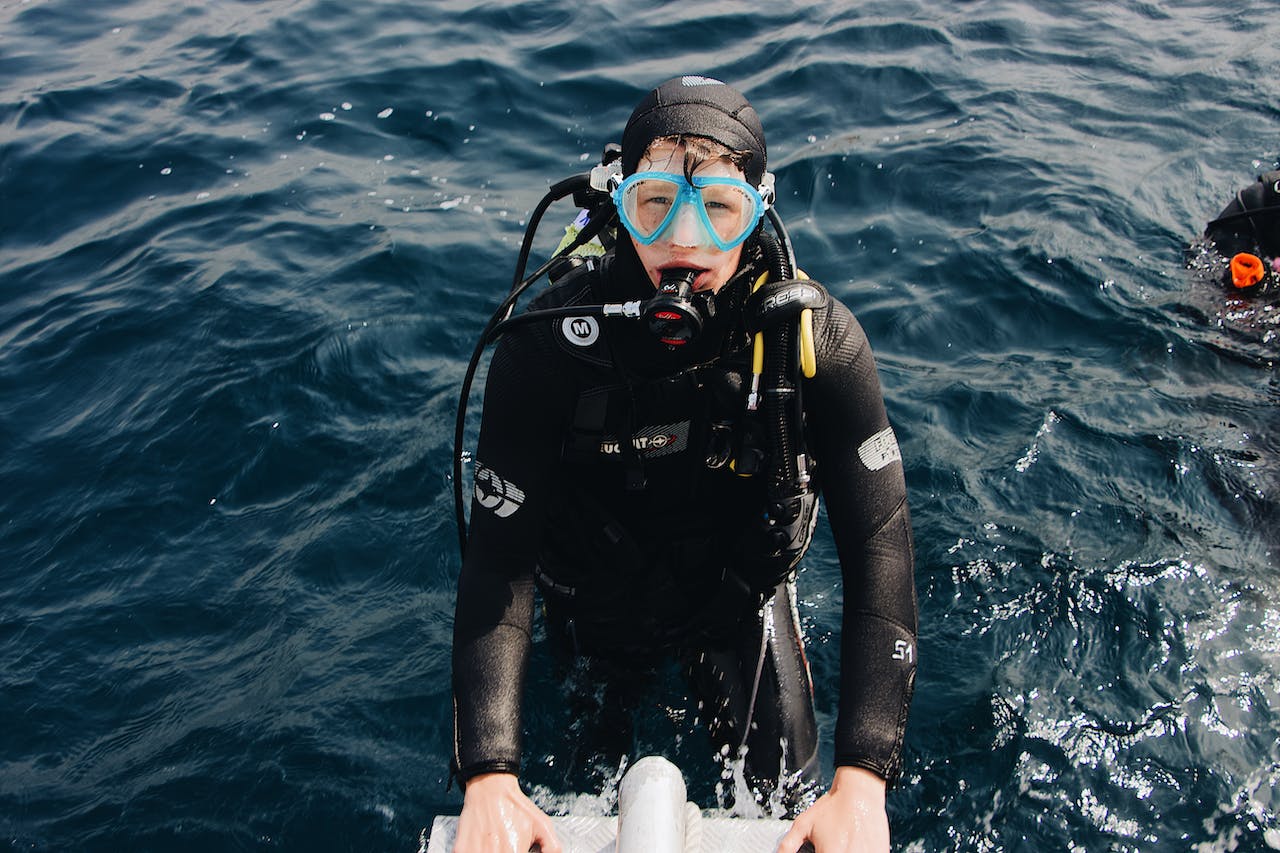
Before venturing into the undersea world, it's necessary to familiarize yourself with the tools and equipment that guarantee your security and boost your diving experience. Let's take a closer take a look at the essential diving devices:

  • Diving Mask: Your Portal to the Deep
    • A premium diving mask uses a clear view of the undersea world.
    • Comfort and a protected fit are vital for a pleasant dive.
  • Snorkel: Surface Breathing for Air Conservation
    • The snorkel allows you to save your tank's air before coming down.
    • It works as an important tool for surface area breathing and relaxation.
  • Fins: Propelling Through the Abyss
    • Fins are your undersea propulsion system, helping with effective and simple and easy motion.
    • Choose the ideal set to match your diving design and choices.
  • Wetsuit or Drysuit: Temperature-Adaptive Gear
    • Depending on water temperature level, choose a wetsuit or drysuit to guarantee thermal security.
    • Comfort and insulation are important for a comfy dive.
  • Buoyancy Control Device (BCD): Mastering Buoyancy
    • The BCD is vital for buoyancy management and preserving your position in the water column.
    • Learn to utilize it successfully for a smooth diving experience.
  • Regulator: Your Lifeline Below
    • The regulator links you to your air supply and allows undersea breathing.
    • Familiarize yourself with its elements and performance for a protected dive.
  • Cylinders: Compressed Air Reservoir
    • These tanks save compressed air or enriched air mixes for breathing undersea.
    • Understand tank sizes and the significance of appropriate upkeep.
  • Dive Computer: Dive Data at Your Fingertips
    • This essential gadget screens depth, time undersea, and climb rate.
    • It safeguards versus decompression illness and makes sure safe diving practices.

Chapter 3: Dive Training Essentials

To end up being a skilled scuba diver, detailed training is vital. The training procedure normally consists of 3 primary elements:

  • Classroom or Online Learning: Delving into Theory
    • Dive into the theoretical elements of diving, covering subjects like dive physics, devices upkeep, and security procedures.
    • Gain insights into pressure modifications, buoyancy, and managing possible undersea emergency situations.
  • Confined Water Training: Immersing in Practical Skills
    • In a regulated environment, such as a pool, experience your very first undersea breaths.
    • Practice important abilities like buoyancy control, mask cleaning, and emergency situation treatments.
  • Open Water Dives: Applying Skills in Reality
    • Under the assistance of a licensed trainer, carry out a series of dives in open water.
    • Showcase your capability to handle devices and browse undersea.

Upon effective training conclusion, you'll make accreditation, approving you the flexibility to take part in independent diving activities. This accreditation unlocks to a world of undersea experiences and sets the phase for sophisticated courses, consisting of deep diving, wreck diving, and undersea photography.

Chapter 4: Dive Destinations Beyond Imagination

The attraction of diving encompasses a huge selection of travel chances. Dive travel is not almost checking out the undersea world; it's an invite to immerse yourself in varied cultures, foods, and enchanting landscapes. Let's check out some leading dive locations around the world:

  • Tropical Reefs: Vibrant Coral Paradises
    • Picture yourself wandering through lively coral gardens bursting with unique fish in the Maldives or the Great Barrier Reef.
    • Revel in the marvels of marine biodiversity in these tropical wonderlands.
  • Shipwrecks: A Journey through History
    • Embark on a trip through time by checking out sunken ships became synthetic reefs.
    • Witness the fascinating marine life that now grows in the middle of these maritime antiques.
  • Caves and Caverns: Thrills in Darkness
    • For adrenaline lovers, cavern diving uses a unique and difficult experience.
    • Navigate complex cavern systems and find enchanting underground landscapes.
  • Cold Water Diving: Unveiling Hidden Treasures
    • Dive into the cooler waters of chillier environments, where distinct communities and sensational undersea vistas wait for.
    • Encounter the covert charm underneath the surface area in unforeseen areas.
  • Marine Reserves: Sanctuaries of Life
    • Explore secured marine reserves, home to a few of the world's wealthiest biodiversity.
    • Witness threatened types and beautiful coral developments in their natural environment.

Chapter 5: The Magic of Scuba Diving - An Enthralling Experience

The real magic of diving depends on the fascinating experiences it uses to travelers. As you come down underneath the surface area, you go into a world of unequaled charm and serenity. The feeling of weightlessness is liberating, the silence is meditative, and the biodiversity is amazing. Each dive provides brand-new encounters and discovering chances, making diving a continually satisfying pursuit.

Conclusion: Dive into the Depths - Your Adventure Awaits

In conclusion, scuba diving is more than a sport or a pastime; it is an entrance to a covert world filled with marvels beyond creativity. Armed with the ideal scuba equipment and appropriate training, you can start a life time of experience and discovery. The possibilities for diving travel are limitless, with each location providing its distinct attraction and obstacles.

Don't wait any longer; start today and reveal the unbelievable world that lies underneath the waves. Whether you're an adrenaline candidate, a nature lover, or somebody looking for an unique experience, diving has something amazing to use. Dive in, and let the ocean's tricks mesmerize your creativity as you check out the depths of this captivating undersea world.